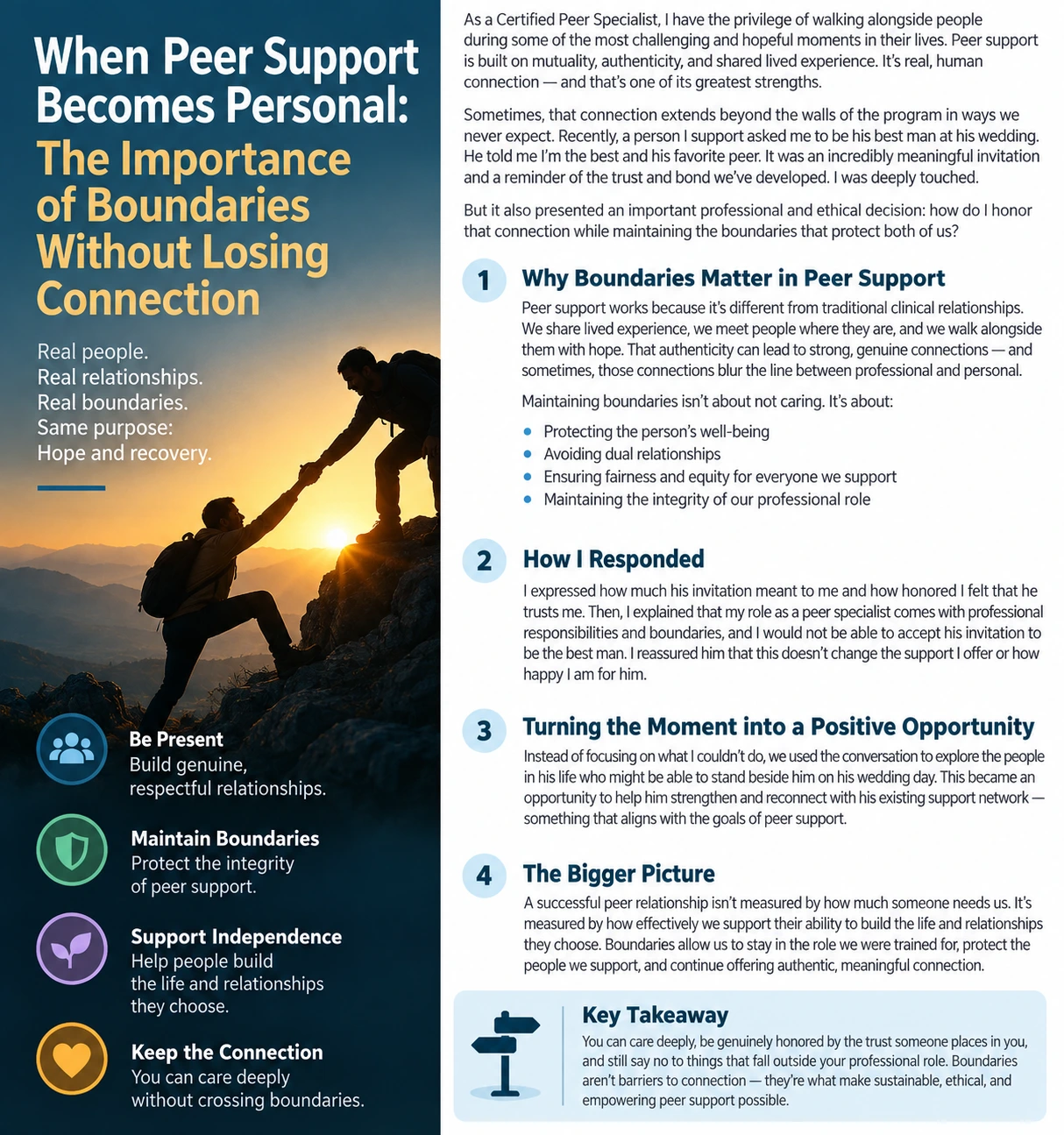
As a Certified Peer Specialist, I have the privilege of walking alongside people during some of the most challenging and hopeful moments in their lives. Peer support is built on mutuality, authenticity, and shared lived experience. It’s real, human connection — and that’s one of its greatest strengths.
Sometimes, that connection extends beyond the walls of the program in ways we never expect. Recently, a person I support asked me to be his best man at his wedding. He told me I’m the best and his favorite peer. It was an incredibly meaningful invitation and a reminder of the trust and bond we’ve developed. I was deeply touched.
But it also presented an important professional and ethical decision: how do I honor that connection while maintaining the boundaries that protect both of us?
Why Boundaries Matter in Peer Support
Peer support works because it’s different from traditional clinical relationships. We share lived experience, we meet people where they are, and we walk alongside them with hope. That authenticity can lead to strong, genuine connections — and sometimes, those connections blur the line between professional and personal.
Maintaining boundaries isn’t about not caring. It’s about:
- Protecting the person’s well-being
- Avoiding dual relationships
- Ensuring fairness and equity for everyone we support
- Maintaining the integrity of our professional role
How I Responded
I expressed how much his invitation meant to me and how honored I felt that he trusts me. Then, I explained that my role as a peer specialist comes with professional responsibilities and boundaries, and I would not be able to accept his invitation to be the best man. I reassured him that this doesn’t change the support I offer or how happy I am for him.
Turning the Moment into a Positive Opportunity
Instead of focusing on what I couldn’t do, we used the conversation to explore the people in his life who might be able to stand beside him on his wedding day. This became an opportunity to help him strengthen and reconnect with his existing support network — something that aligns with the goals of peer support.
The Bigger Picture
A successful peer relationship isn’t measured by how much someone needs us. It’s measured by how effectively we support their ability to build the life and relationships they choose. Boundaries allow us to stay in the role we were trained for, protect the people we support, and continue offering authentic, meaningful connection.
Key Takeaway
You can care deeply, be genuinely honored by the trust someone places in you, and still say no to things that fall outside your professional role. Boundaries aren’t barriers to connection — they’re what make sustainable, ethical, and empowering peer support possible.