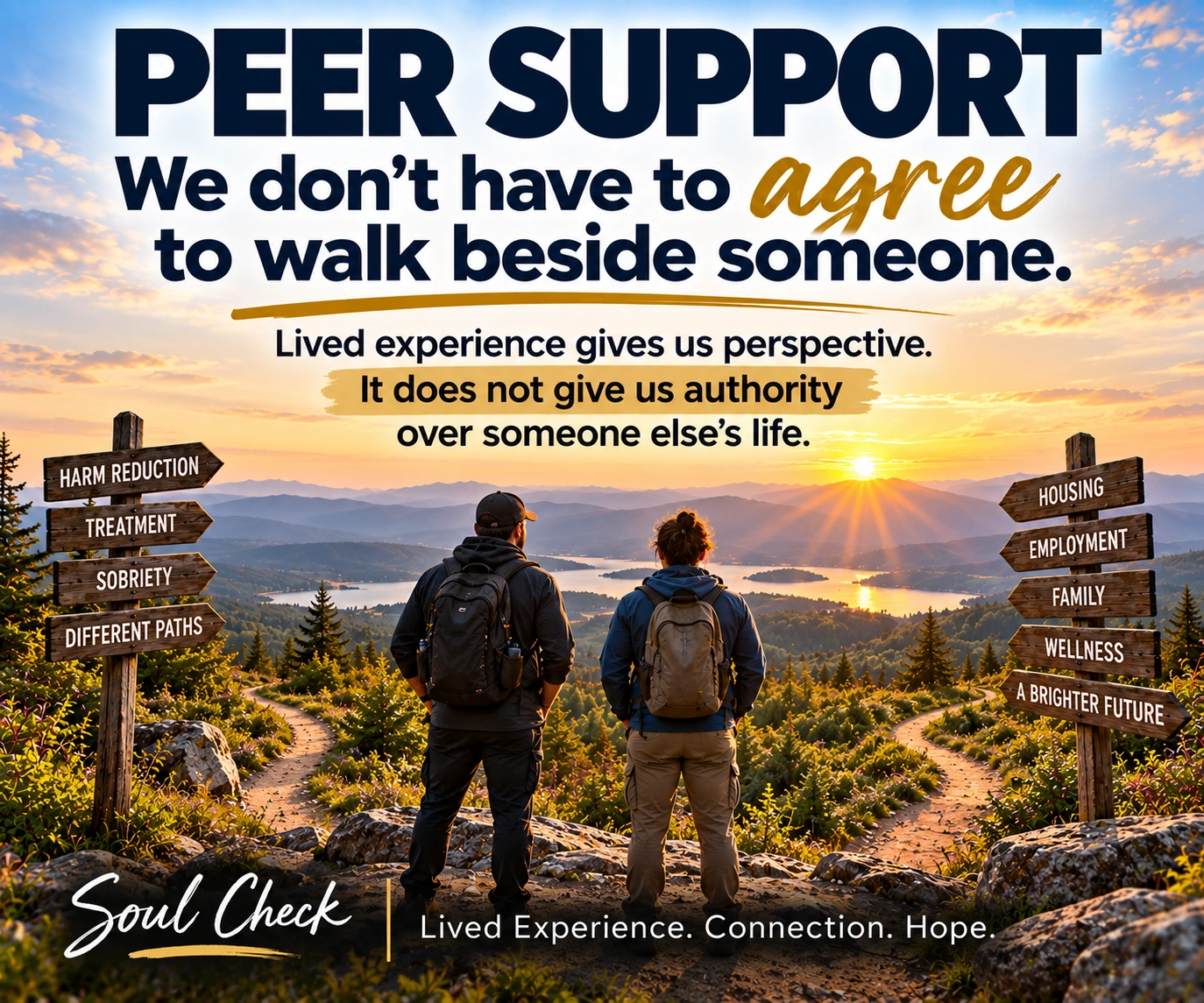
One of the greatest tests of peer support is whether we can respect someone’s choices when they aren’t the choices we would make.
It’s relatively easy to be supportive when someone agrees with us.
The harder work begins when they don’t.
They may choose a recovery pathway different from ours.
They may continue using substances while working toward reducing harm.
They may decline treatment we believe could help.
They may make a decision that our own lived experience tells us we would never make again.
That can be uncomfortable—especially when we genuinely care about the person.
But peer support was never supposed to be about creating people who think like us.
Our lived experience gives us perspective.
It does not give us authority over someone else’s life.
We can share what happened to us.
We can talk openly about possible consequences.
We can offer resources, explore alternatives, ask difficult questions, and remain honest about our concerns.
And then we have to respect something fundamental:
The person sitting across from us still gets to choose.
I believe this is where peer support separates itself from persuasion.
Our job isn’t to get someone to arrive at our answer.
Our job is to create enough safety, honesty, and connection that they can begin discovering their own.
Sometimes the most person-centered thing we can say is:
“I may see it differently, but I’m still here. What do you think your next step should be?”
Agreement is not a requirement for respect.
And respect should never be conditional on someone choosing the recovery we would choose for them.